Flushing Ewes Before Breeding: Does It Really Work?
Flushing, increasing ewe nutrition before breeding, can raise lambing rates by 10–25%. Learn how it works, when to do it, and which ewes benefit most.
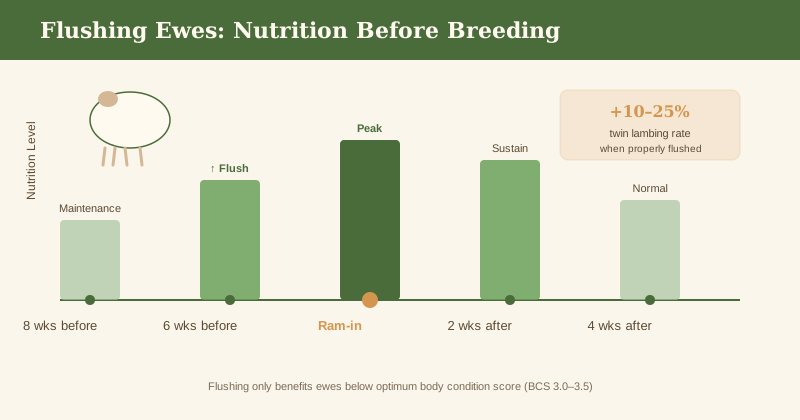
Flushing, the practice of increasing ewe nutrition for 2–3 weeks before and during the breeding season, is one of the most cost-effective management tools in sheep production. Research consistently shows it can increase ovulation rates and lambing percentages by 10–25% in ewes that respond to it. But it doesn't work the same way for every animal.
Here's what the science actually says, who benefits most, and how to do it right. So you're setting up for a successful lambing season you can track with our sheep gestation calculator.
What Is Flushing and Why Does It Work?
Flushing is a short-term increase in energy intake designed to boost the number of eggs a ewe ovulates during her breeding cycle. The mechanism isn't fully understood, but the current evidence points to rising blood glucose and insulin-like growth factor (IGF-1) levels signaling the hypothalamus and pituitary gland to increase gonadotropin (LH and FSH) release. Higher gonadotropins stimulate multiple follicles to mature and ovulate rather than just one.
The key word is "rising." It's the upward trajectory of nutritional status, not a static high level, that triggers the response. A ewe on poor nutrition for months who suddenly gets good pasture or grain will respond more strongly than a ewe that's been on high nutrition all summer.
This is why flushing works best on thin to moderate-condition ewes (BCS 2.5–3.5) and why timing the move to better pasture or the introduction of grain to coincide with the breeding season matters.
Does Flushing Work for Every Ewe?
No. Research from Penn State Extension and the University of Wisconsin consistently shows the strongest flushing response in:
- Ewes in moderate body condition (BCS 2.5–3.0) at the start of flushing, they have room to respond to increased nutrition
- Breeds with naturally higher ovulation rates (Dorset, Finnsheep, Romanov crosses)
- Ewes in their second or third lactation: adult ewes respond more consistently than yearlings
Ewes that don't respond as well:
- Ewes already in excellent condition (BCS 3.5+): they're essentially already "flushed" and adding more nutrition doesn't increase ovulation rate further
- Yearling ewe lambs: their first breeding season response to flushing is unpredictable
- Merino ewes: Merinos generally have lower ovulation rates and respond less dramatically to flushing than British breeds
How to Flush Ewes
Start 3 weeks before the ram goes in. Flushing begun 2–3 weeks before breeding lets the hormonal response ramp up before the breeding season begins.
Method 1: Move to improved pasture. If you have good-quality pasture available (clover-rich or lush regrowth), move ewes onto it 3 weeks before breeding. This is the simplest and most natural approach. Legume pastures (clover, alfalfa) are more effective than grass alone, they're higher in energy and protein.
Method 2: Grain supplementation. Add 0.25–0.5 lbs of corn, barley, or a commercial ewe supplement per head per day for 3 weeks pre-breeding. Continue through breeding. Don't overdo it, high grain without adequate roughage causes rumen acidosis.
Method 3: Combination. Move to better pasture AND add a small grain supplement. This tends to produce the most consistent results in research trials.
Continue flushing for 3 weeks after the ram is introduced. This supports the early embryo through implantation (approximately days 12–16 post-breeding). Ending flushing abruptly at breeding can reduce conception rates and increase early embryo loss.
After 3 weeks post-breeding, return ewes to a normal maintenance ration. Early pregnancy (days 20–90) does NOT require elevated nutrition, embryos are tiny and demands are minimal. Overfeeding in early pregnancy can actually increase early embryo loss by disrupting the uterine hormonal environment.
What Results Should You Expect?
Research results vary widely by breed, starting body condition, and method. A representative range from university trials:
- Low BCS ewes (2.0–2.5) flushed onto improved pasture: 15–25% increase in lambing percentage
- Moderate BCS ewes (2.5–3.0) flushed with grain: 10–15% increase in lambing percentage
- High BCS ewes (3.5+) flushed: 0–5% increase (statistically insignificant)
In practical terms: if your baseline is 150% lambing rate and flushing adds 15%, you get 172%, about 22 more lambs per 100 ewes. At even $100 per market lamb. That's $2,200 from a feed investment of perhaps $15–20 per ewe in extra grain. The ROI is compelling.
Flushing and Breeding Calendar Integration
Flushing changes nothing about gestation length, once a ewe conceives, her pregnancy runs its normal course based on her breed. A flushed Suffolk ewe still carries for 144 days; a flushed Merino still carries for 150.
What flushing changes is how many lambs she carries. A ewe that ovulated two eggs instead of one will carry twins, and twins lamb about 1–2 days earlier than singles and require more intensive late-pregnancy feeding.
After breeding, use the lambing date calculator to determine each ewe's expected due date. If you used flushing and expect higher twin rates, plan your lambing pen count accordingly, you'll need more individual pens.
Practical Checklist for Flushing
- Score body condition of all ewes 4 weeks before planned breeding date
- Separate thin ewes (BCS <2.5) for additional management
- Identify your flushing method (pasture, grain, or both)
- Move ewes to improved nutrition 3 weeks before ram introduction
- Put the ram in after 3 weeks on flush nutrition
- Continue supplementation for 3 weeks after breeding begins
- Return to maintenance ration after week 3 post-breeding
- Use the sheep gestation calculator to track due dates after breeding
The data supports flushing as a cost-effective practice for most commercial operations running moderate-condition ewes of British or meat breeds. It's less useful for Merino or fine-wool operations and for ewes already in top condition. Match the practice to your animals, and measure your results year over year to determine whether it's worth continuing in your specific context.
Common Flushing Mistakes to Avoid
A few avoidable errors keep flushing from working as well as it could. The biggest is starting too late. Flushing has to begin three weeks before ram introduction so the rising plane of nutrition has time to influence ovulation. A bag of grain dumped in the feeder the day the ram goes in does almost nothing for ovulation rate.
The second common error is keeping flush nutrition going too long after breeding. Ewes already in early pregnancy don't benefit from extra grain past week three; the embryo is small and energy demand is low. Continued grain feeding through mid-pregnancy can produce overweight ewes that have harder lambings later. Pull the supplementation back on schedule.
The third mistake is treating the flock as one group. Mature, fit ewes won't respond. Thin ewes will respond strongly but also need ongoing support past flushing because they're still rebuilding. Yearlings respond unpredictably and benefit more from steady year-round nutrition than from a short-term boost. If you have the facilities to split the breeding mob into two groups (flush vs maintain), the targeted approach almost always outperforms a blanket strategy.
Finally, don't forget to mark the breeding date for each cycle. Flushing increases the chance of twins, which means more pens, more colostrum, and a slightly earlier lambing date for those ewes. Use a raddle harness on the ram, log first-mark dates, then run those dates through the calculator to map out a realistic pen-by-pen schedule.