Setting Up the Perfect Lambing Pen: Step-by-Step Guide
How to design and set up lambing pens (jug pens) that protect ewes and lambs, support bonding, and make your lambing season easier to manage.
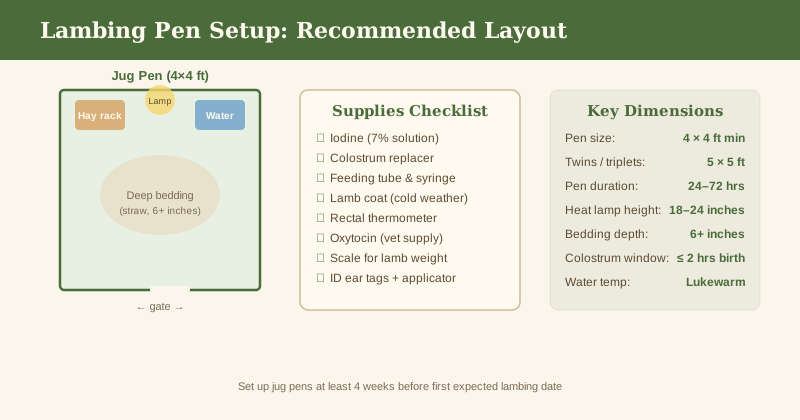
The lambing pen, called a "jug pen" by many shepherds, is one of the most important pieces of infrastructure for a successful lambing season. A well-designed jug pen protects the ewe-lamb bond, keeps newborns from wandering into danger, and gives you a controlled environment to manage any health issues that arise.
Knowing when your ewes are due (use our sheep gestation calculator) means you can have pens ready before you need them. Last-minute pen assembly during an active lambing is nobody's idea of a good time.
Why Lambing Pens Matter
In a group pen with multiple ewes, newborn lambs are at risk from several hazards:
- Mismothering. Other ewes may claim a lamb that isn't theirs, disrupting the real mother's bonding. This is especially common with first-time mothers whose maternal instinct is still developing.
- Trampling. Lambs born in crowded conditions get stepped on by other sheep. Small lambs, especially weak ones, can be injured or killed.
- Hypothermia. A lamb that wanders away from its mother in a large group may not find its way back and will chill quickly.
- Starvation. In a group setting, a ewe may nurse another ewe's lamb and be "milked out" before her own lamb gets its share.
Individual pens for 24–48 hours after birth allow the ewe to bond exclusively with her own lambs, give you a controlled space to check nursing, and make it easy to tube-feed or supplement lambs that need it.
Sizing Your Pens
The minimum practical size for a single ewe with one or two lambs is 4 feet × 4 feet (1.2m × 1.2m). For ewes with triplets or for large-breed ewes, 4×5 feet is better.
How many pens do you need? Plan for 15–20% of your flock to be in pens simultaneously at peak lambing. If you have 50 ewes and a 2-week lambing window, you'll need roughly 8–12 pens, ewes typically stay in for 2–3 days, so new occupants rotate in as others graduate to group pens.
For a 100-ewe flock with lambing spread over 3 weeks, 15–18 pens is a practical working number. Build more than you think you need, unused pens are far less expensive than a lost lamb.
Pen Materials and Design
Side height. Solid sides 3–4 feet high. Solid sides (not just rails) prevent the ewe from seeing and bonding with lambs in adjacent pens. This is critical, if a ewe can see and lick a neighbor's lamb, she may bond to it instead of her own.
Gate design. The gate should swing both ways and latch securely. You'll often have your hands full (literally carrying a ewe or lamb) and need to open the gate with one hand or a shoulder push.
Materials:
- Plywood panels: Cheap, easy to build, solid sides. Treat with wood preservative or paint to reduce moisture absorption and make cleaning easier. Disadvantage: heavier and less flexible to rearrange.
- Panel systems (metal hurdles): More expensive upfront, but modular. You can expand or shrink the pen size, clean them easily with a pressure washer, and store flat when not in season. Worth the investment for larger operations.
- Straw bales: Traditional and surprisingly effective. Stack bales as pen walls, use a gate or panel for one side. Warm, good insulation, and the bales can be used for bedding after the season. Disadvantages: harder to clean/disinfect, can harbor parasites.
Bedding
Use clean, dry straw. At least 3–4 inches (8–10 cm) deep in a freshly set-up pen. Straw provides insulation from the cold concrete or ground, absorbs fluids from birth, and gives the ewe secure footing while nursing.
Change bedding between occupants. Old, wet bedding harbors coliform bacteria that cause navel infections (joint ill) in newborns. Don't just add fresh straw on top, remove wet bedding completely, apply a light dusting of agricultural lime on the floor (kills bacteria and reduces moisture), then bed fresh.
Between lambing seasons: Power wash all panels and surfaces with a disinfectant (dilute bleach, 1:30, or agricultural disinfectant), allow to dry thoroughly, and store dry.
Lighting
You need adequate lighting to assess ewe and lamb health at every check. Bare-bulb fluorescents or LED shop lights on a circuit you can control from the pen area are ideal. Bright enough to see clearly; controlled enough to dim during quieter periods.
Heat lamps. Have at least one heat lamp per 3–4 pens. Position above the pen, 18–24 inches above lamb height, to provide a warm zone without risk of fire from contact with bedding or straw. Use ceramic bulb fixtures rated for heat lamps, plastic fixtures are a fire hazard. Always have the lamp attached to a chain or clip so it can't fall into the bedding.
Infrared heat lamps (250W bulbs) provide radiant heat without blinding white light. Chilled or premature lambs may need supplemental heat for 24–48 hours.
Water and Feed Access
Each pen needs a water source, either a bucket hung on the pen gate or a nipple drinker on a low supply line. The ewe needs fresh water at all times, especially in the first 24–48 hours after lambing when she's rebuilding hydration.
A small hay rack inside the pen keeps hay clean and off the bedding floor. Wet hay on the floor becomes a bacterial breeding ground quickly.
Grain: A small grain supplement in the first 24–48 hours supports milk let-down, especially in ewes that had difficult deliveries. Don't overfeed grain, ewes that go from no grain to heavy grain suddenly can develop digestive upset.
Managing Pen Flow During Lambing Season
Create a system for tracking which ewes and lambs are in which pen. A simple whiteboard outside each pen (or a tagging system) noting:
- Ewe ear tag number
- Number and sex of lambs
- Date lambed
- Any notes (tube-fed, assisted delivery, watch for mastitis)
Graduate ewe-lamb pairs to a group pen when the ewe is clearly bonded (vocalizing to her specific lambs, allowing nursing without restraint) and lambs are nursing freely and have visible full bellies. 48 hours is the typical minimum; first-time mothers may need 72–96 hours.
Group pens after the jugs can be organized by lamb age (same-age groups with mothers) to simplify management and reduce mismothering risk in the group setting.
Setting Up the Timeline
Here's when to have everything ready, based on your predicted lambing dates from the ewe lambing calculator:
- 6 weeks before first lambing: Order any missing supplies (heat lamps, iodine, colostrum)
- 4 weeks before: Build or set up pen panels; check for damage from last year
- 2 weeks before: Bed pens with fresh straw; test all lighting and heat lamps
- 1 week before: Do a final walkthrough; confirm water access works; set up record-keeping board
A well-prepared lambing area is one of those investments that pays in saved lambs, saved sleep, and saved sanity. Set it up right, and when the first ewe goes into labor, you'll be ready.