7 Common Lambing Problems and How to Handle Them
From malpresentation and ringwomb to hypothermia and mismothering, here are 7 common lambing problems, how to recognize them, and what to do.
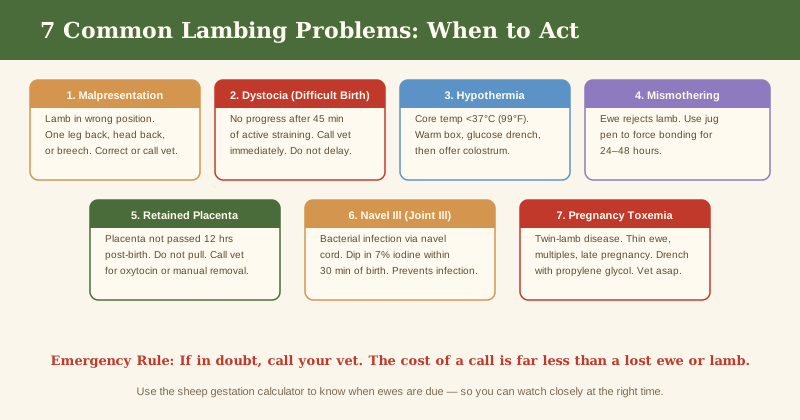
Most ewes lamb without problems. Most, but not all. When something goes wrong during lambing, the window to act is short. A ewe in prolonged labor burns through her energy reserves fast, and a lamb deprived of oxygen for more than a few minutes faces permanent damage or death.
Knowing these 7 common lambing problems and how to handle them could save both the ewe and her lambs. And knowing when your ewes are due, using the sheep gestation calculator, means you're there to help when it matters.
1. Malpresentation
What it is: The lamb is positioned incorrectly for delivery. Normal presentation is both front feet forward with the head resting on the knees. Any deviation, one leg back, head back, breech, sideways, is a malpresentation.
How to recognize it: A ewe straining hard for 45+ minutes with no progress, or with only a head visible but no feet, or only one foot showing. You might see the ewe straining and then stopping, a sign the lamb is jammed.
What to do:
- Wash your hands and arm thoroughly. Apply generous OB lubricant.
- Gently explore the birth canal to identify the lamb's position.
- Push the lamb back slightly (with a contraction, not against it) to create space to reposition the trapped part.
- Correct the position, extend a tucked leg, bring the head forward, or reposition a breech lamb.
- Once correctly positioned, guide the lamb out with the ewe's contractions.
Call your vet when: You can't identify the presentation, you've been working for more than 10 minutes with no progress, there are multiple lambs and you're unsure which limbs belong to which, or the ewe is exhausted.
2. Ringwomb (Incomplete Cervical Dilation)
What it is: The cervix fails to dilate fully. Normal dilation allows you to pass your entire hand through the cervix. In ringwomb, the cervix opens to 1–3 fingers but no further, despite strong contractions.
How to recognize it: The ewe has been in active labor for 2+ hours, the membranes may have ruptured, but when you check the birth canal, the cervix is a rigid ring you can't pass your hand through.
What to do: This is a veterinary emergency. Manual dilation is rarely successful and risks cervical damage. Your vet will assess whether:
- Time and oxytocin will allow further dilation
- A caesarean section is required
- Humane euthanasia is the appropriate outcome for a severely affected ewe
Prevention: Ringwomb tends to recur in the same ewe. Animals that required C-sections for ringwomb should be culled from the breeding flock.
3. Uterine Inertia
What it is: The ewe's uterus stops contracting before delivery is complete. She may have delivered one lamb and then stopped straining, with more lambs still inside.
How to recognize it: After delivering a lamb, a ewe that showed signs of carrying multiples (large belly, ultrasonography) stops labor and doesn't deliver more lambs within 30–45 minutes. She may seem relieved but still has a noticeably full abdomen.
What to do:
- Check manually for additional lambs.
- Low-dose oxytocin (given by a vet or with vet authorization) can restart contractions.
- If lambs are accessible and in normal position, assist delivery.
Note: Never give oxytocin if you haven't confirmed the birth canal is clear. Oxytocin with an undelivered lamb in malpresentation can cause uterine rupture.
4. Lamb Hypothermia
What it is: A newborn lamb's body temperature falls below 99°F (37°C). Below 95°F (35°C) is severe hypothermia requiring immediate intervention. Lambs less than 5 hours old cool rapidly in wet or cold conditions.
How to recognize it: A lamb that won't stand, won't nurse, has cold extremities (especially ears and legs), and is unresponsive to stimulation. Measure rectal temperature with a thermometer. It's the only reliable way.
What to do:
- Mild (99–101°F): Dry thoroughly, move to a warm sheltered area, encourage nursing.
- Moderate (95–99°F): Warm lamb in a warming box set to 104°F (40°C). Tube-feed colostrum once the lamb is warm enough to swallow safely (test by touching the roof of the mouth, if swallowing reflex is absent, don't tube-feed; the lamb may aspirate).
- Severe (<95°F, 5+ hours old): Administer 20% glucose solution intraperitoneally (IP injection into the abdomen, learn this from your vet or extension service before lambing season). Then warm. Then tube-feed.
A lamb less than 5 hours old with hypothermia also needs glucose from colostrum as a priority, colostrum provides both heat (energy) and passive immunity. Get colostrum into every lamb within 2 hours of birth.
5. Mismothering and Lamb Rejection
What it is: The ewe refuses to accept or bond with her lamb(s). Most common in first-time mothers (ewe lambs) and in ewes that had difficult births or were heavily sedated.
How to recognize it: The ewe moves away when the lamb approaches, butts the lamb away, or fails to lick and vocalize to the newborn. A lamb that stands crying with a full, hollow flanks (not nursing) is likely rejected.
What to do:
- Restrain the ewe in a jug pen, she can't avoid the lamb in a small space.
- Hold the ewe for the first few nursing sessions (3–4 times in the first day).
- Rub the lamb with the ewe's afterbirth or vaginal secretions, smell is the primary bonding trigger.
- If the ewe's milk doesn't let down, oxytocin from the vet can help.
- For persistent rejection (48+ hours), consider fostering the lamb onto another ewe that lost a lamb, or bottle-raising.
Adoption tricks: To graft a lamb onto a ewe that lost her own lamb, skin the dead lamb and put the hide on the orphan. It's macabre but effective. Commercial "adoption collars" that spread the ewe's scent on the lamb also work.
6. Retained Placenta
What it is: Normal expulsion of the placenta (afterbirth) occurs within 2–4 hours of lambing. If the placenta hasn't passed after 12 hours. It's retained.
How to recognize it: Placental tissue hanging from the vulva beyond 12 hours post-lambing. A foul smell developing within 24–48 hours. The ewe may be off feed and show signs of systemic illness.
What to do: Call your vet. Do not pull the placenta forcefully, the placentomes (button-like attachments) are embedded in the uterine wall and pulling tears uterine tissue, causing hemorrhage and infection. Your vet will assess:
- Manual removal (requires skill and good timing)
- Oxytocin to stimulate uterine contractions
- Antibiotics to prevent metritis (uterine infection)
Retained placentas are serious. Ewes that develop metritis from retained placentas may become permanently infertile and require culling.
7. Prolapsed Uterus
What it is: After delivery, the uterus turns inside out and protrudes from the vulva, a full prolapse, not just a cervical prolapse. This is a genuine emergency.
How to recognize it: A large, pink-red, grape-like mass protruding from the vulva after lambing. The mass will be the size of a large melon in full prolapse.
What to do:
- Call your vet immediately. Uterine prolapse is a life-threatening emergency.
- Keep the ewe calm and quiet. Lying down exacerbates the problem.
- Clean the protruding uterus with clean water and cover with a damp, clean cloth to prevent drying and contamination.
- If the vet is more than 30 minutes away, ask for phone guidance.
The vet will replace the uterus manually, administer oxytocin to keep it contracted, and assess whether the ewe will retain the uterus or requires amputation.
A ewe that has prolapsed once has a significantly higher chance of prolapsing again. Most shepherds cull these animals from the breeding flock.
The best way to handle lambing emergencies is to be there when they happen. Use the lambing date calculator each season to know which ewes are approaching their due dates, ramp up observation during the lambing window, and build a working relationship with a large-animal vet before the season starts, not during it.