How to Prepare for Lambing Season: Complete Checklist
A step-by-step lambing season preparation guide covering supplies, feeding, pen setup, and health management, 8 weeks before to lambing day.
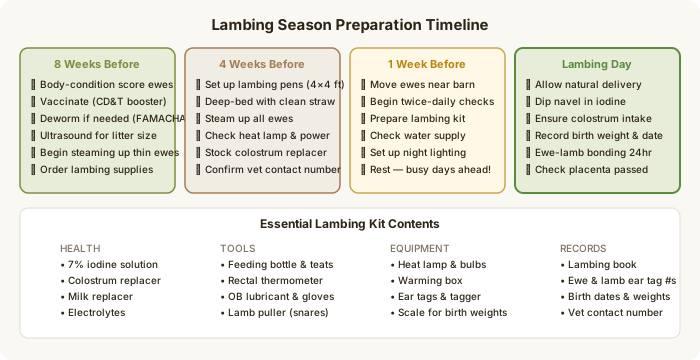
Lambing season is one of the most demanding periods in sheep farming. It's also the most consequential, lamb survival rates, ewe health, and your profitability for the year all hinge on how well you prepare. The good news is that most lambing problems are preventable, and preparation starts weeks before the first lamb drops.
Use our sheep gestation calculator to pin down your lambing window, then work backward through this checklist.
8 Weeks Before: Health and Body Condition
Eight weeks out, you still have time to make a real difference in ewe condition and immunity before lambing stress kicks in.
Score body condition (BCS). Weigh or condition-score every ewe. Target BCS 3.0–3.5 at lambing (on a 1–5 scale). Ewes below 2.5 are at high risk for pregnancy toxemia; ewes above 4.0 are prone to difficult births and mastitis. Separate thin ewes now and put them on a rising plane of nutrition.
Vaccinate. Give CD&T (clostridium perfringens types C and D, plus tetanus) boosters 4–6 weeks before lambing. Colostrum from vaccinated ewes passes this immunity to lambs. Ewes that didn't receive a primary series need two doses 3–4 weeks apart, start this even earlier.
Parasite management. Use FAMACHA scoring to identify anemic ewes that need deworming. Don't blanket-deworm the whole flock, it accelerates anthelmintic resistance. Target the 20–30% of ewes carrying 80% of the worm burden. Avoid deworming in the last 2 weeks before lambing, as the stress of handling can trigger early labor in heavily pregnant ewes.
Ultrasound scanning. If you're scanning for pregnancy and litter size. This is the window (70–90 days post-breeding). Knowing which ewes are carrying singles, twins, or triplets lets you feed groups correctly. Triple-bearing ewes need substantially more energy in late pregnancy than singles.
4 Weeks Before: Infrastructure and Supplies
Set up lambing pens. Individual lambing pens (jug pens) should be at least 4×4 feet per ewe-lamb unit, with solid sides to prevent ewes from bonding with neighbors' lambs. Plan for 10–15% of your flock to be in pens at any one time during peak lambing. Bed with clean, dry straw, 3–4 inches deep. Check electrical connections and water access.
Stock your lambing kit. See the supply list below. Order anything you don't have, don't assume the farm supply store will have colostrum replacer in stock during lambing season.
Steam up all ewes. Begin increasing concentrate (grain) intake for all ewes, not just the thin ones. In the last 6 weeks, ewes need increasing energy as fetal growth accelerates. A common target: add 0.5–0.75 lbs of corn or a commercial ewe supplement per day per ewe carrying twins, more for triplets. Don't overfeed singles.
Check infrastructure. Test heat lamps (and have spare bulbs). Ensure water doesn't freeze. Confirm your lambing barn or shelter keeps wind and rain off newborns, hypothermia kills more lambs than almost anything else.
Essential Lambing Kit
Stock these before the first ewe shows signs:
Health supplies:
- 7% iodine solution for navel dipping (not dilute iodine, you need the 7% concentration)
- Colostrum replacer (at least 4–6 doses on hand)
- Milk replacer for orphan lambs
- Electrolytes for weak lambs
- Penicillin or your vet-recommended antibiotic for infection
- Oxytocin (prescription, discuss with your vet in advance)
Tools:
- Lamb feeding bottle with nipples
- Stomach tube and syringe (for tube-feeding weak lambs)
- OB lubricant and shoulder-length disposable gloves
- Lamb puller/snares for assisted deliveries
- Rectal thermometer (normal lamb temp is 101–104°F / 38.5–40°C)
- Warming box or heat lamp for chilled lambs
Records:
- Lambing log (date, ewe ID, lamb ID, sex, birth weight, notes)
- Scale for birth weights (low birth weight is a major predictor of lamb loss)
- Ear tags and applicator
Emergency contacts:
- Large-animal vet (establish this relationship before lambing, vet emergencies are harder to fill for unknown clients)
- Backup shepherd or neighbor who can cover night checks
1 Week Before: Final Preparations
Move ewes closer to the barn. Ewes approaching their due dates should be within easy checking distance. If you're running ewes on pasture, bring the heavily pregnant ones into a sacrifice paddock near the barn at least a week before their expected due date (from the lambing date calculator).
Start twice-daily checks. Morning and evening at minimum. During peak lambing, many shepherds check every 4 hours, with an overnight check. Most sheep do lamb at night, plan your schedule accordingly.
Check the lambing kit one more time. Replace anything used or expired. Confirm the heat lamp works. Make sure you have phone signal or a baby monitor in the barn.
Rest. Seriously. Lambing is tiring. Get good sleep the week before your first expected due date, you'll be running on less soon enough.
Managing Lambing: Day-to-Day
Once ewes start lambing, your job is to monitor and assist only when needed. Intervening unnecessarily can disrupt the ewe-lamb bond and create problems that wouldn't have existed. Here's a practical routine:
At each check:
- Walk quietly through the group. Look for ewes standing apart, pawing, or straining.
- Check any ewe that's been in active labor for more than 30 minutes with no progress.
- Check lambs for nursing, a lamb with a full belly is warm and healthy; a hollow-flanked lamb is hungry and at risk.
- Dip navels on any new lambs not yet treated.
- Record births: ewe ID, lamb ID, number of lambs, sex, birth weight if you're weighing.
When to put ewes in the jug pen:
- When labor is imminent (stage 1 or 2 labor)
- After delivery, to establish bonding
- For any lamb-ewe pair with a bonding problem
- For any sick or weak lamb needing supplemental feeding
Keep ewe-lamb pairs in jugs for 24–48 hours minimum, longer for first-time mothers or if the ewe needed assistance.
Common Preparation Mistakes
Waiting until ewes start lambing to set up pens. By then you're scrambling. Pens should be ready 2 weeks before the first expected birth.
Not accounting for twin and triplet ewes in your feeding plan. A ewe carrying triplets needs nearly twice the energy of a single-bearing ewe in the last 3 weeks. If you don't separate by litter size, triplet-bearers will be underfed and singles overfed.
Assuming the first lambing will give you time to gather supplies. Ewes sometimes lamb a week earlier than predicted. Have everything ready before the lambing window opens.
Not knowing your vet's emergency protocol. Some large-animal practices require you to be an established client before they'll respond to after-hours calls. Get your flock registered with a vet before lambing season.
Preparation isn't about eliminating surprises, lambing always has them. It's about having the tools, knowledge, and plan to handle whatever comes. Use the ewe lambing calculator to work out your lambing window, and start this checklist 8 weeks out. Your future sleep-deprived self will thank you.