Ram to Ewe Ratio: How Many Rams Does Your Flock Need?
The standard ram-to-ewe ratio is 1:25 to 1:35. Learn how breed, age, terrain, and breeding system affect how many rams you need, and how to manage the breeding season.
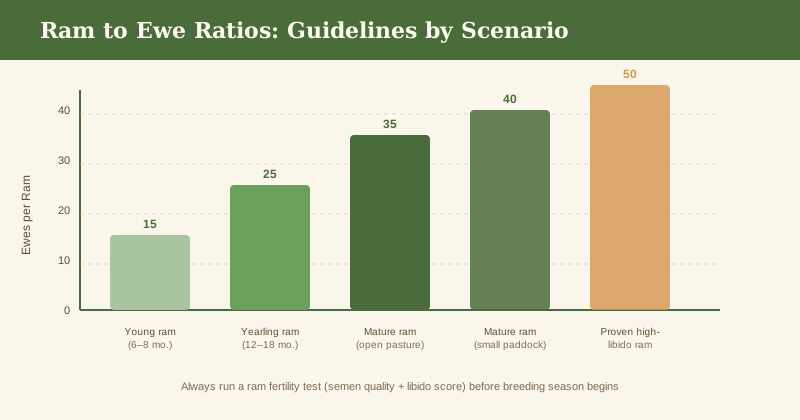
The ram-to-ewe ratio is one of those decisions that seems simple on the surface, how many rams do you run with your ewes?, but has significant practical consequences for your lambing rate and your rams' health.
Get it right, and every ewe that cycles gets bred efficiently. Get it wrong, too few rams, and you'll have a spread-out, patchy lambing season with lower conception rates. Too many rams in one group and you'll have fighting, injured rams, and paradoxically lower conception rates as dominant males spend more time fighting than breeding.
Once breeding is done, use the sheep gestation calculator to predict lambing dates and plan your season.
The Standard Ratio: 1:25 to 1:35
The most widely cited guideline from the American Sheep Industry Association and university extension services is one ram for every 25–35 ewes in a conventional hand-mating or pasture-breeding system. This assumes a 35–42 day breeding season (two complete estrous cycles for ewes that don't conceive on the first breeding).
Why this range? A mature ram in good body condition can physically breed 2–3 ewes per day without significantly impacting sperm quality. Over a 35-day season with 30 ewes, that works out to roughly 1 breeding per ewe per cycle, with some redundancy built in.
Factors That Change the Ratio
Ram age:
- Ram lambs (first breeding season, 7–8 months old): Use a 1:10 to 1:15 ratio. Young rams are less experienced and tire more easily. They also may not have fully developed libido compared to mature rams.
- Yearling rams (12–18 months): 1:15 to 1:25. Still building experience and stamina.
- Mature rams (2–5 years): 1:25 to 1:35. Peak breeding efficiency.
- Older rams (6+ years): Monitor carefully. Libido often declines; some older rams become completely inactive. Don't assume an old ram with seniority is still doing the job, check with a Raddle harness.
Terrain:
- Flat or small paddocks: rams cover ground easily; 1:30–1:35 is fine.
- Rough, hilly, or large range: ewes are spread out. Rams cover less ground effectively. Use 1:20 to 1:25, or use multiple smaller mating groups across the range.
Breed:
Some breeds have more active libido and higher sperm output. Suffolk, Dorset, and Texel rams are generally vigorous breeders. Merino rams on extensive range may need a lower ratio (1:20–1:25) because of the distances involved.
Synchronized breeding:
If you synchronize ewes with hormonal treatment (CIDR or progesterone sponges), a large proportion of your ewes will come into estrus within 24–48 hours of synchronization. This creates a bottleneck, more ewes cycling simultaneously than a single ram can breed. For synchronized flocks, use a 1:10 to 1:15 ratio, or run multi-sire groups.
Multi-sire groups:
Multiple rams in one group can be used, but isn't without issues. Dominant rams suppress subordinate rams' breeding activity through competition. If you run 3 rams with 75 ewes, you may effectively have 1–2 rams doing most of the breeding. For multi-sire groups, use rams of similar age and size to reduce dominance hierarchy effects.
Raddle Harnesses: Verifying Breeding Activity
A Raddle (marking) harness crayon on the ram is the most important management tool in the breeding pen. The ram's brisket carries a marking pad that transfers crayon color to the ewe's rump when she's mated.
How to use raddle harnesses:
- Start with a light-colored crayon (yellow, orange)
- Change to a darker color (red, dark blue) after 17 days (one estrous cycle)
- Any ewe marked with the second color either wasn't mated on first contact or returned to estrus (failed to conceive first time)
This system tells you:
- Which ewes are being bred (and roughly when)
- Whether your ram is working (if few ewes are marked, the ram may be infertile or inactive)
- Which ewes returned to cycle (likely 17 days after the first breeding)
For breeding date tracking, record the date each ewe is first marked. This is your breeding date input for the lambing date calculator. Ewes marked with the first color lamb based on the date of first marking; ewes marked with the second color lamb approximately 17 days later.
Pre-Breeding Ram Management
Start managing rams 6–8 weeks before breeding.
Semen evaluation: Have your vet or a livestock AI technician evaluate ram semen before the breeding season. A ram with poor sperm motility or morphology will have low conception rates, and you won't know until lambing, too late to do anything. This is especially important for valuable purchased rams or rams that have been through illness or heat stress.
Body condition: Target BCS 3.0–3.5 at breeding. A thin ram in BCS 2.0 will tire quickly and may lack the libido to cover his full quota. Conversely, an overly fat ram (BCS 4.0+) may have reduced heat tolerance and lower sperm quality. Feed rams a rising plane of nutrition for 6–8 weeks pre-breeding, same principle as flushing ewes.
Foot care: Trim hooves and treat any footrot or footscald before breeding. A ram with painful feet won't mount properly. Check and treat 4+ weeks before breeding so treatments are complete.
Flystrike check: Check the belly wool and between the legs for flystrike. Infested rams are distracted, uncomfortable, and often refuse to breed.
Physical soundness: Check the ram's eyes (pink eye causes temporary vision loss that disrupts breeding), teeth (broken mouths may indicate poor condition), and legs (arthritis or injury limits mounting). A lame ram is an unproductive ram.
Single-Sire vs Multi-Sire Mating
Single-sire (one ram per group): You know exactly which ram bred which ewes. Essential for pedigree recording, breed associations, and identifying ram contributions to lamb performance. Requires enough pens/paddocks to separate groups. If the single ram is infertile or injured, you have no backup.
Multi-sire (two or more rams per group): More practical for large flocks where individual pen separation isn't possible. Built-in backup if one ram stops working. Disadvantage: no certainty about parentage. Watch for dominance effects, put rams of similar age and size together.
After Breeding: Tracking the Lambing Season
Once the rams come out, your breeding dates determine your lambing window. Every day of the 35–42 day breeding season is a potential conception date, meaning your lambing window can span 5–6 weeks.
The most practical approach: use the sheep gestation calculator to calculate lambing dates for:
- The earliest possible date (day 1 of breeding + gestation days)
- The latest possible date (last day of breeding + gestation days)
This gives you your full lambing season range. Ewes marked with the second raddle color (17 days after first breeding) have a lambing date approximately 17 days later than the main group.
With this information, you can plan your labor, schedule your lambing supplies, set up pens, and prepare your feeding program, all before the first lamb arrives.