Colostrum for Newborn Lambs: Why the First 4 Hours Are Critical
Colostrum is a newborn lamb's first line of defense. Learn how much to give, when to give it, and what to do when the ewe can't provide it.
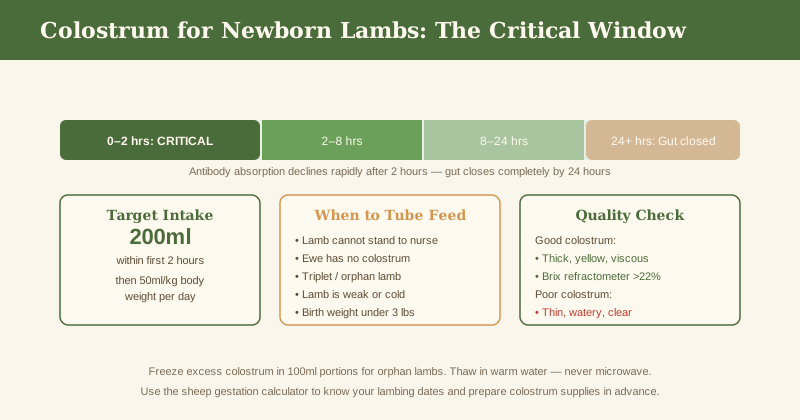
A newborn lamb has no circulating antibodies. Its immune system is essentially blank, waiting to be programmed by colostrum, the first milk the ewe produces in the hours after birth. Miss this window, and no amount of good management afterward can fully compensate for the immunity deficit.
The stakes are high: lambs that don't receive adequate colostrum in the first 4–6 hours have dramatically higher rates of septicemia, pneumonia, and enteritis in their first weeks of life. Colostrum management is arguably the single most impactful thing you can do for lamb survival, more so than birth weight, ambient temperature, or even breed.
Knowing when your ewes are due (use the sheep gestation calculator) means you're there for this critical window, not finding a weak lamb hours after it was born.
Why Colostrum Is Irreplaceable
Colostrum is concentrated in three essential components:
Immunoglobulins (antibodies). Sheep are different from humans, maternal antibodies don't cross the placenta during pregnancy. The lamb is born with zero passive immunity. Colostrum provides immunoglobulin G (IgG), which is absorbed directly through the lamb's gut wall into the bloodstream during the first 18–24 hours of life. After 24 hours, the gut "closes" and IgG can no longer be absorbed intact.
Energy. Newborn lambs have very limited energy reserves. Colostrum is 3–4 times higher in fat than regular milk. A lamb that doesn't nurse within 2–4 hours begins burning body reserves, loses body heat faster, and spirals into hypoglycemia and hypothermia simultaneously.
Growth factors and laxatives. Colostrum contains hormones and growth factors that stimulate gut development, and its laxative properties clear meconium (the lamb's first stool, which accumulates in the gut during gestation). Without this, constipation and gut obstruction can occur.
How Much Colostrum Does a Lamb Need?
A lamb needs 10% of its body weight in colostrum in the first 24 hours, with the majority delivered in the first 4–6 hours.
For a typical 10-lb (4.5 kg) Suffolk lamb:
- First 4 hours: 100–150 ml (3–5 oz)
- First 12 hours: 300–400 ml total
- First 24 hours: 450–500 ml total
Smaller lambs need proportionally the same amount per unit of body weight. A 7-lb (3.2 kg) lamb from a fine-wool breed still needs 10% of its weight, roughly 320 ml in the first 24 hours.
Assessing Nursing in the First Hours
Don't assume a lamb is nursing because it's standing near the ewe. Here's how to check:
The full belly check. A well-fed lamb has a visible, round belly. A hollow-flanked lamb with a sucked-in abdomen has not nursed adequately.
Milk in the mouth. Open the lamb's mouth, a well-nursed lamb will have traces of cream-colored colostrum.
Energy and behavior. A well-fed lamb is warm, bright-eyed, and trying to nurse. A cold, lethargic, hollow-sided lamb is in trouble.
Rectal temperature. Normal is 101.5–104°F (38.5–40°C). Below 100°F (37.8°C) = early hypothermia; below 95°F (35°C) = severe hypothermia requiring immediate warming and tube feeding.
When to Tube-Feed
Tube-feeding, passing a soft rubber or silicone feeding tube into the esophagus and stomach, is a critical skill for any shepherd. Learn it from your vet or an experienced farmer before your first lambing season.
Tube-feed when:
- The lamb is more than 4 hours old and hasn't nursed
- The lamb is too weak to suckle effectively
- The ewe is rejecting the lamb
- The lamb's rectal temperature is below 100°F (needs warming first, then tube-feed)
- The ewe has insufficient colostrum (mastitis, dead teat, agalactia)
Tube-feeding technique (brief):
- Measure tube length from mouth to last rib. This is how far to insert (approximately 12–15 inches in a newborn lamb).
- Gently pass the tube over the tongue, angled toward the esophagus (left side, not the trachea on the right). You should feel resistance at the esophageal entrance, a gentle forward pressure passes it.
- Blow gently into the tube. If you feel air resistance (not a hollow sound), you're in the esophagus. If you feel no resistance and the lamb coughs, you're in the trachea, pull back and try again.
- Attach the syringe and deliver the colostrum slowly (over 30–60 seconds). Don't push too fast.
Colostrum Sources When the Ewe Can't Provide
Other ewes. Fresh colostrum from another ewe that has just lambed is the best substitute. Milk 50–100 ml from a well-milking ewe; most ewes in a well-managed flock produce more colostrum than one or two lambs consume.
Frozen colostrum bank. Collect and freeze excess colostrum from high-producing ewes early in lambing season. Freeze in 100–200 ml portions in zip-lock bags. Store up to 1 year at -4°F (-20°C). Thaw in warm water (not a microwave, heat above 140°F destroys immunoglobulins).
Goat colostrum. Fresh colostrum from does provides IgG that lambs can absorb. Many shepherds with small sheep flocks keep a goat in milk for emergency colostrum purposes. Goat colostrum is an acceptable short-term substitute.
Commercial colostrum replacer. Lamb-specific colostrum replacers (not enhancers, look for "replacer" on the label, which contains actual IgG, not just milk proteins) are a viable backup. Quality varies by brand. Look for products with IgG content of at least 30g per dose. Colostrum Replacement products by Lifeline, Land O'Lakes, and others are widely available from farm supply stores.
Cow colostrum. A distant last resort. Bovine IgG has lower bioavailability in lambs than ovine or caprine IgG. Lamb gut receptors absorb bovine antibodies less efficiently. Use only if nothing else is available, and double the dose.
Colostrum and Your Lambing Calendar
The colostrum window doesn't wait for convenient timing. It opens at birth and closes 18–24 hours later. That's why being present during the lambing window, which you can plan from the ewe gestation calculator, matters so much.
A lamb born at 3am that isn't found until 7am has lost 4 hours of its colostrum absorption window. If the ewe rejected it, that lamb has received nothing in critical hours. This is why night checks matter during the lambing season, and why knowing your predicted lambing dates lets you schedule those checks intelligently rather than checking every night from October through April.
Build a colostrum supply before lambing begins. Stock commercial replacer, identify which ewes typically produce abundantly (and can be milked for your bank), and know how to tube-feed before you need to. It's a skill that takes 10 minutes to learn and could save dozens of lambs across your career.