How Long Are Sheep Pregnant? Gestation by Breed
Sheep are pregnant for 144 to 150 days depending on breed. Learn exact gestation lengths for Suffolk, Merino, Dorset, Cheviot, and 8 other breeds.
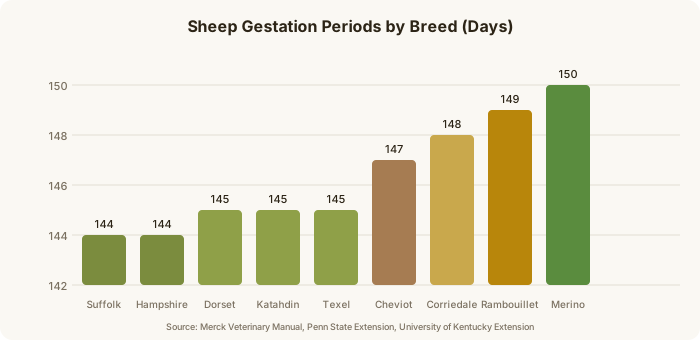
Sheep are pregnant for 144 to 150 days, depending on the breed. That's roughly 4.75 to 5 months. The exact number matters. A 6-day spread is the difference between being ready in the barn or scrambling to catch a surprise lamb in the field at midnight.
The Sheep Gestation Period: Why It Varies by Breed
The length of a ewe's pregnancy is driven by genetics, specifically the breed's evolutionary history and production purpose. Fine-wool breeds developed in arid climates tend to carry lambs slightly longer than fast-maturing meat breeds. This isn't just trivia. It's data you need to plan your lambing season correctly.
Here's a breakdown of gestation lengths by breed, validated against the Merck Veterinary Manual, Penn State Extension, and University of Kentucky Cooperative Extension:
| Breed | Gestation (Days) | Notes |
|---|---|---|
| Suffolk | 144 | Most common commercial meat breed in the US |
| Hampshire | 144 | Heavy-muscled, fast-growing lambs |
| Dorset | 145 | Excellent maternal breed; can breed out of season |
| Katahdin | 145 | Hair sheep; low maintenance, parasite-tolerant |
| Texel | 145 | High lean-meat yield; popular in Europe |
| Cheviot | 147 | Hardy hill breed; strong maternal instinct |
| Dorper | 147 | South African hair breed; heat-tolerant |
| Corriedale | 148 | Dual-purpose (wool and meat); easy care |
| Romney | 148 | Suited to wet climates; good fleece |
| Rambouillet | 149 | Fine-wool breed; large-framed |
| Merino | 150 | Finest wool; longest gestation of common breeds |
Use our sheep gestation calculator to get an exact lambing date for your ewe based on her breed and breeding date.
How to Calculate a Sheep's Due Date
The formula is straightforward:
Expected Lambing Date = Breeding Date + Breed Gestation Days
For a lambing window, add ±3 days. Most ewes lamb within this window, though biological variation can push delivery a day or two earlier or later.
Example: A Dorset ewe bred on November 10 has a 145-day gestation. Add 145 days to November 10 and you get April 4, with a lambing window of April 1–7.
A quick way to do this manually: add 5 months and subtract 8 days from the breeding date (works best for 147-day breeds like Cheviot). For Suffolk (144 days), add 4 months and 24 days. But honestly, just use our lambing date calculator, it handles all breeds instantly.
What Affects Gestation Length in Sheep?
Breed is the primary driver, but a few other factors can shift delivery by 1–2 days:
Litter size. Ewes carrying twins or triplets often lamb 1–2 days earlier than singles. The increased fetal mass triggers earlier hormonal changes that initiate labor. If your ewe was ultrasounded and is carrying multiples, mentally adjust your calendar, she'll likely be at the early end of her lambing window.
Ewe age. Yearling ewes (lambing for the first time) sometimes carry slightly longer than mature ewes. This is a minor effect, usually less than a day, but worth knowing.
Nutrition. Severely underfed ewes in early pregnancy may have slightly shorter gestations. More importantly, poor nutrition dramatically increases the risk of pregnancy toxemia and weak lambs. Feed ewes properly throughout pregnancy regardless of projected lambing dates.
Season. Sheep that conceive late in the breeding season (as daylength increases) may carry slightly longer. Again, a minor effect compared to breed.
Trimesters of Sheep Pregnancy
Just like human pregnancy, the ewe's gestation divides into three phases with distinct management implications:
First trimester (days 1–50). Embryo implantation and early fetal development. The ewe's nutrient needs are only slightly above maintenance. Avoid stress, rough handling, or overcrowding during this period, embryo loss is most common in the first 30 days. Keep ewes on good pasture or quality hay.
Second trimester (days 51–100). Steady fetal growth. This is a relatively quiet period, the ewe looks and acts normal. Maintain body condition. Don't let ewes get too fat (condition score 3.5+ can cause difficult births) or too thin (2.0 or below increases toxemia risk).
Third trimester (days 101 to lambing). The final 6 weeks are critical. About 70% of fetal growth happens here. Start increasing energy intake. This is called "steaming up." Twin-bearing ewes need approximately 150% of maintenance energy in the last 3 weeks. Watch for signs of pregnancy toxemia in ewes carrying multiples.
Checking Where Your Ewe Is in Pregnancy
If you know the breeding date, check your ewe's current progress using the calculator, it shows the trimester, days elapsed, and days remaining. If you don't know the exact breeding date (common with group mating), ultrasound scanning can determine fetal age and approximate due date.
Scanning is especially useful for identifying multiples. A ewe carrying triplets needs a different feeding program than a single-bearing ewe, and knowing early lets you separate and manage them appropriately.
How to Track Multiple Ewes
On farms with more than a handful of ewes, tracking individual breeding dates becomes essential. A few practical approaches:
- Raddle (marking) harness on the ram. Each ewe gets marked when bred. Change the raddle color every 17 days (one estrous cycle), first mating in one color, second cycle in another. Any ewe marked with the second color either wasn't bred on first contact or returned to cycle, which shifts her lambing date by 17 days.
- Breeding groups with synchronized rams. Put rams in on a specific date, remove them after 6 weeks. Ewes bred on day 1 lamb earliest; those bred near the end lamb latest. Run the calculator for both ends of the breeding period to bracket your lambing season.
- Individual records. For registered sheep or small flocks, record each ewe's breeding date in a notebook or spreadsheet, then use the lambing date calculator to generate a due date for each animal.
Frequently Asked Questions
Can a sheep's pregnancy be shorter than 144 days?
Rarely, and it's typically a problem. Lambs born before 140 days rarely survive without intensive neonatal care. Premature birth in sheep is usually caused by vaccination reactions (rare), toxins, severe stress, or infectious abortion (e.g., campylobacteriosis, chlamydiosis). If ewes start lambing significantly early, contact your vet immediately.
Can gestation go longer than 150 days?
A day or two past 150 is within normal variation for Merino and Rambouillet. If a ewe goes past 157 days with no signs of labor, call your vet, overdue pregnancies can result in large lambs and difficult deliveries (dystocia).
How long after breeding do you know a ewe is pregnant?
You can ultrasound for pregnancy as early as 25–30 days post-breeding, though 45–60 days is more reliable. Blood progesterone testing works from about 18 days. Visually, udder development becomes noticeable in the last 4–6 weeks of pregnancy.
Understanding your sheep's gestation timeline is the foundation of good flock management. Use our free sheep gestation calculator every breeding season to plan ahead, not after the fact.